
.jpg)
The Path Forward
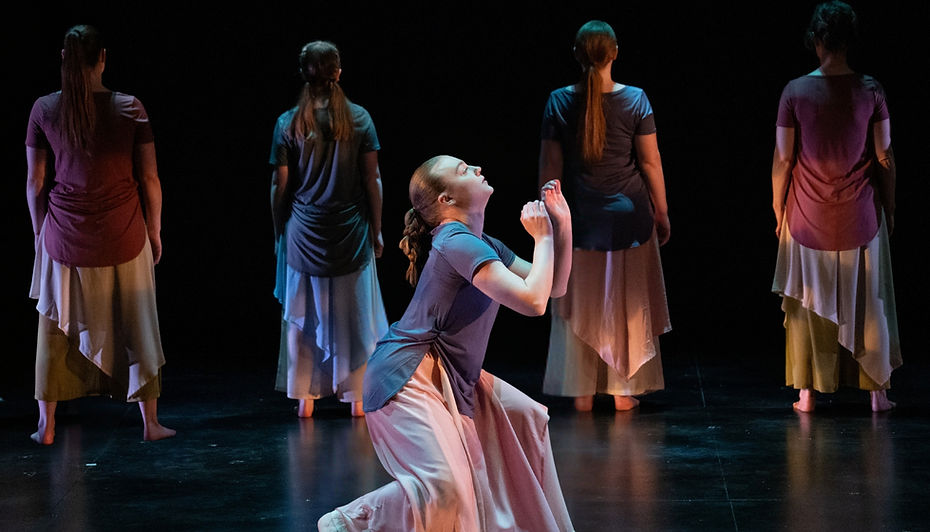
Ambo Dance Theatre is thrilled to close their 2026-2027 season with The Path Forward, a series of dance works that ask the following question: In a world divided by politics, misinformation, status, and identity, what is the path forward toward a more equitable and unified future?
The Path Forward runs June 4-6, 2027 in the University of Louisville Thrust Theatre. There will be a talkback discussion following each evening performance, led by Artistic Director Amberly M. Simpson. Tickets are available for $35 with Pay-What-You-Can options available to make dance affordable and accessible to the community.
.jpg)
The Path Forward
June 4-6, 2027
Professional Productions
June 4 & 5 at 7pm
Family/Sensory-Friendly Productions
June 5 & 6 at 2pm
University of Louisville Thrust Theatre
2314 S Floyd Street
Louisville, KY 40208
Our season finale production of The Path Forward has two different versions: the professional production and the junior version.
The professional production (Friday and Saturday, June 4th & 5th at 7pm) features Ambo's professional company as they present concert works that are more serious in nature. This show is rated PG-13 due to mature themes.
The junior version of the production (Saturday and Sunday, June 5th & 6th at 2pm) functions more like a traditional recital, featuring many shorter works by the Ambo Dance Theatre School students, Community Ensemble, and Junior Company, as well as excerpts of works from Ambo's Professional Company. It is a sensory-friendly and family-friendly version of the professional production, featuring dancers of all ages, backgrounds, and abilities!


The Path Forward
Professional Showcase Pieces
Carmilla
Choreography by Amberly M. Simpson
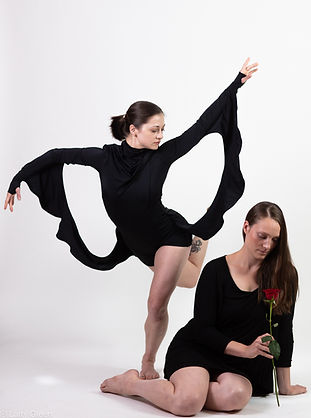
A haunting and tender reimagining of one of literature’s earliest depictions of queer desire, Carmilla draws inspiration from the gothic novella by Sheridan Le Fanu and reframes its story through a contemporary feminist lens. Centering Laura as she grapples with her emerging attraction to the enigmatic Carmilla, the work explores how desire collides with a lifetime of socialization within a heteronormative society. As Laura confronts feelings that have historically been labeled “monstrous,” the piece unravels how femininity, power, and autonomy intersect with identity and longing.
Medusa
Artistic Direction by Amberly M. Simpson
Choreography in Collaboration with Dancers
A visceral reimagining of the Medusa myth, this work reframes one of history’s most vilified female figures through a lens of collective power and feminist resistance. Rather than a punishment inflicted by the goddess Athena, Medusa’s transformation becomes a deliberate, collective act—womxn rising together in solidarity after enduring generations of violence, control, and erasure. Through powerful, unrelenting movement, the piece rejects the narrative of Medusa as a monster and instead reveals her as a symbol of defiance, protection, and righteous vengeance. In this retelling, the serpent-haired figure emerges not as a cautionary tale, but as an embodiment of what happens when womxn reclaim their autonomy and unite against the systems that have long sought to silence them.


Lorelei
Choreography by Ella Vanderkolff
Lorelei is a tragic and enchanting figure from German folklore whose story is rooted in heartbreak. According to one of the most well-known versions of the legend, Lorelei was once a beautiful young woman who fell deeply in love. When her lover abandoned her, she was overwhelmed by grief and despair. Accused of bewitching men with her beauty and blamed for the turmoil her presence caused, she was brought before a bishop for judgment.
Frida
Choreography by Kennedy Morillo
This work centers on Frida Kahlo's life and artistic resilience. At its core, this project is a study in survival through creation. It explores what it means to claim your story, to hold your pain, and to let it transform into something meaningful. The work positions Frida not as a historical figure to imitate, but as a source of conversation and reflection. Her vulnerability, her truth, and her insistence on turning her body and her life into art form is the foundation of this piece.


Lowell Mill Girls
Choreography by Helena Smith-Pohl
"Lowell Mill Girls" is about the young girls who worked at textile mills in Lowell, Massachusetts in the early to mid-19th century. Laborers at the mills worked long and difficult hours with dangerous equipment, cramped sleeping quarters, and strict rules. A number of strikes were led by the Lowell mill girls in order to get better working conditions. The Lowell mill strikes were a catalyst for future working class strikes and women's rights movements.
Carrie Nation (Hatchet Granny)
Choreography by Helena Smith-Pohl
Carrie Nation (commonly referred to as the 'Hatchet Granny') was a staunch prohibitionist during the late Progressive Era just before Prohibition became national law. Her radical, axe-wielding protests against alcohol shattered saloons and expectations of “proper” womanhood.


Mary Wigman
Choreography by Kennedy Morillo
Mary Wigman whose expressive, often haunting choreography rejected classical constraints and redefined the female body as a site of raw emotional and artistic power.
Well Behaved Womxn...Jr.
This production features excerpts of the professional company works as well as works about:
Androgyny
Maya Angelou
Concepcion Arenal
Wendy Carlos
Rebecca Lee Crumpler
Isadora Duncan
The Night Witches
Mary Wigman
and more!


